Machine Learning
All our articles on Machine Learning.
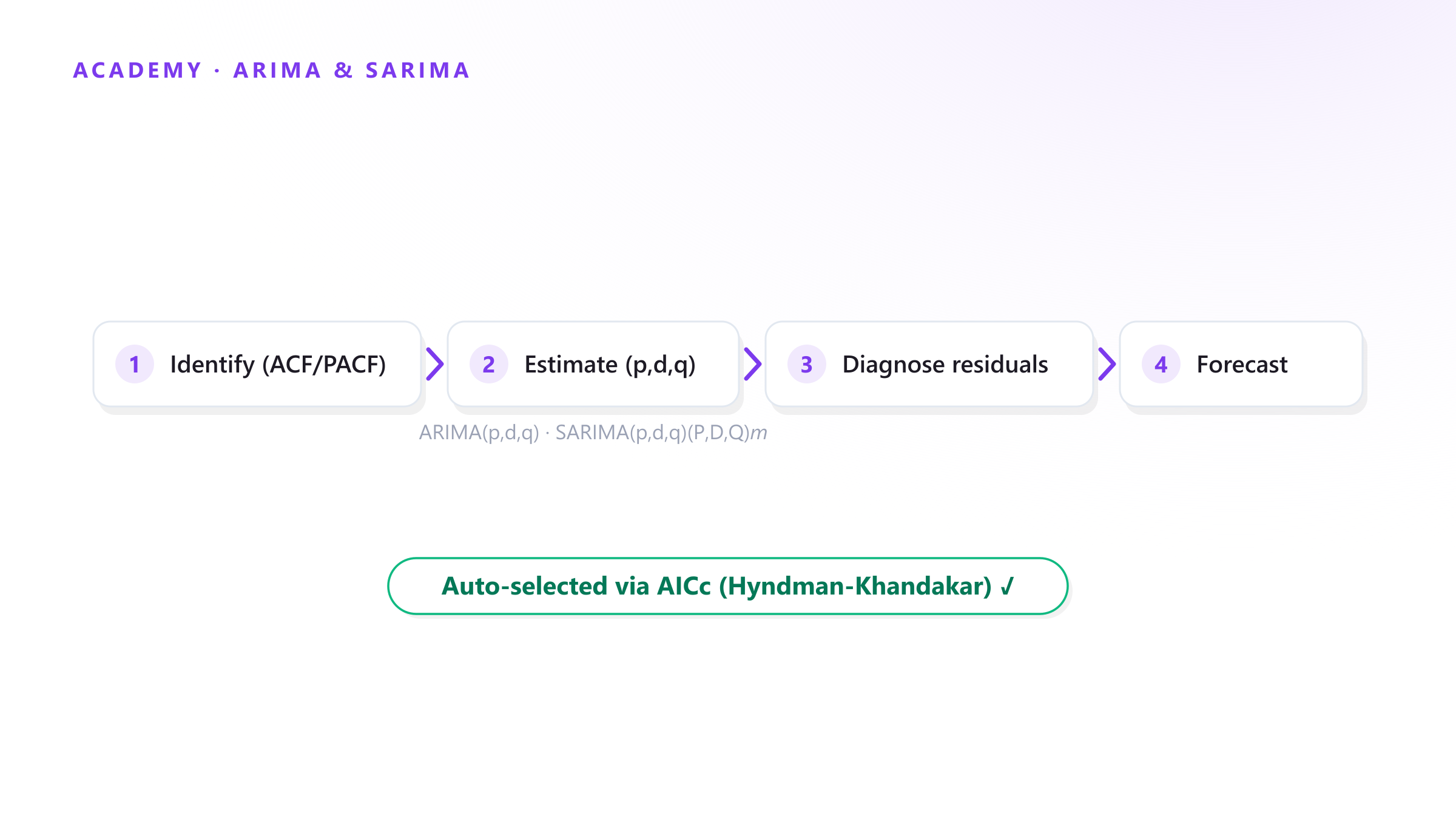
ARIMA and SARIMA models: the Box-Jenkins method for time series forecasting
How ARIMA(p,d,q) and seasonal SARIMA models work: autoregression, differencing, moving averages, ACF/PACF identification, and automatic order selection with the Hyndman-Khandakar algorithm.
Read article →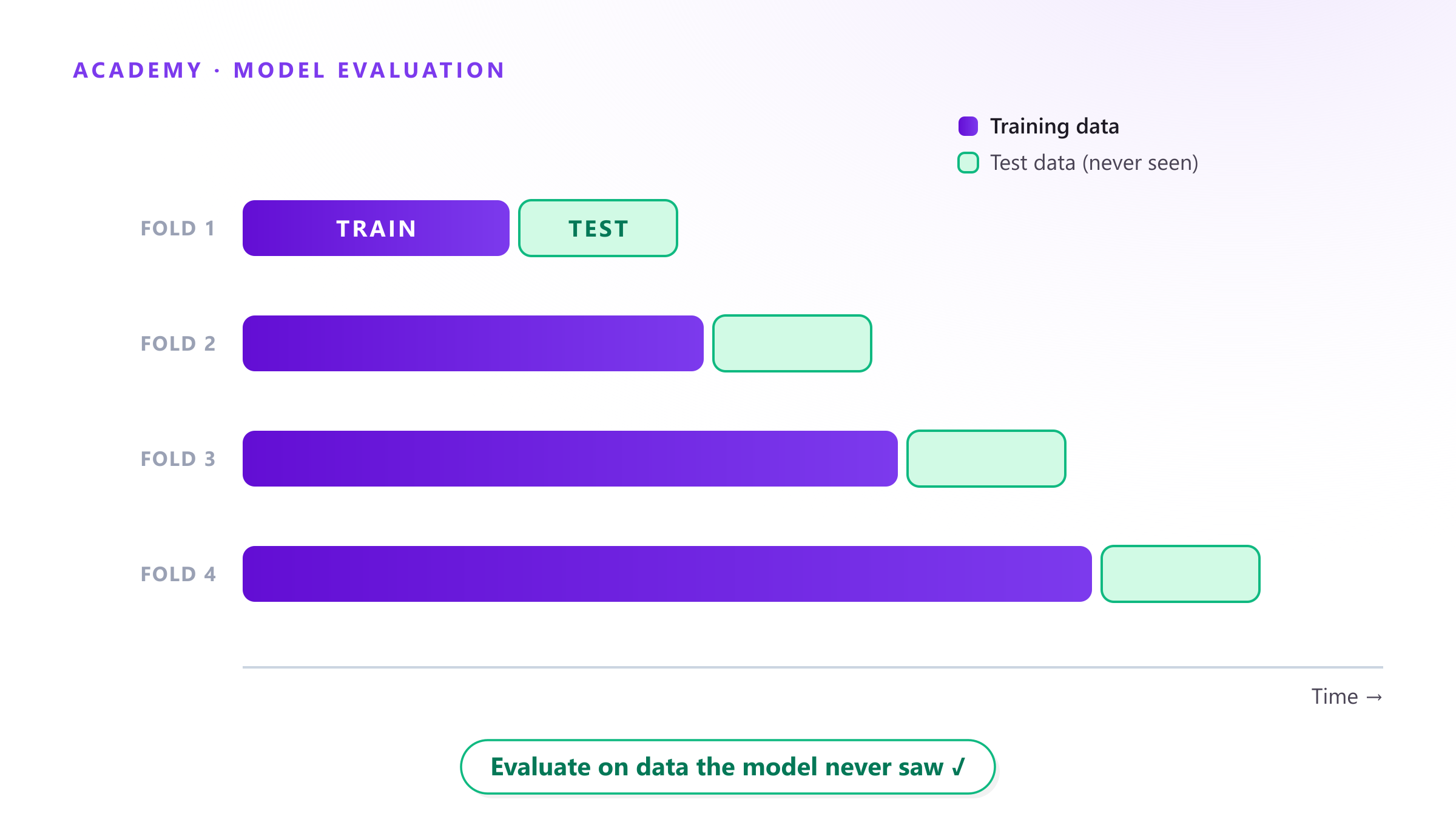
Evaluating forecast models: train/test splits, time-series cross-validation and error metrics
How to measure a forecasting model honestly: why in-sample fit overstates accuracy, how to split time series into train and test sets without leakage, rolling-origin cross-validation, and when to use MAE, RMSE, MAPE, sMAPE or MASE.
Read article →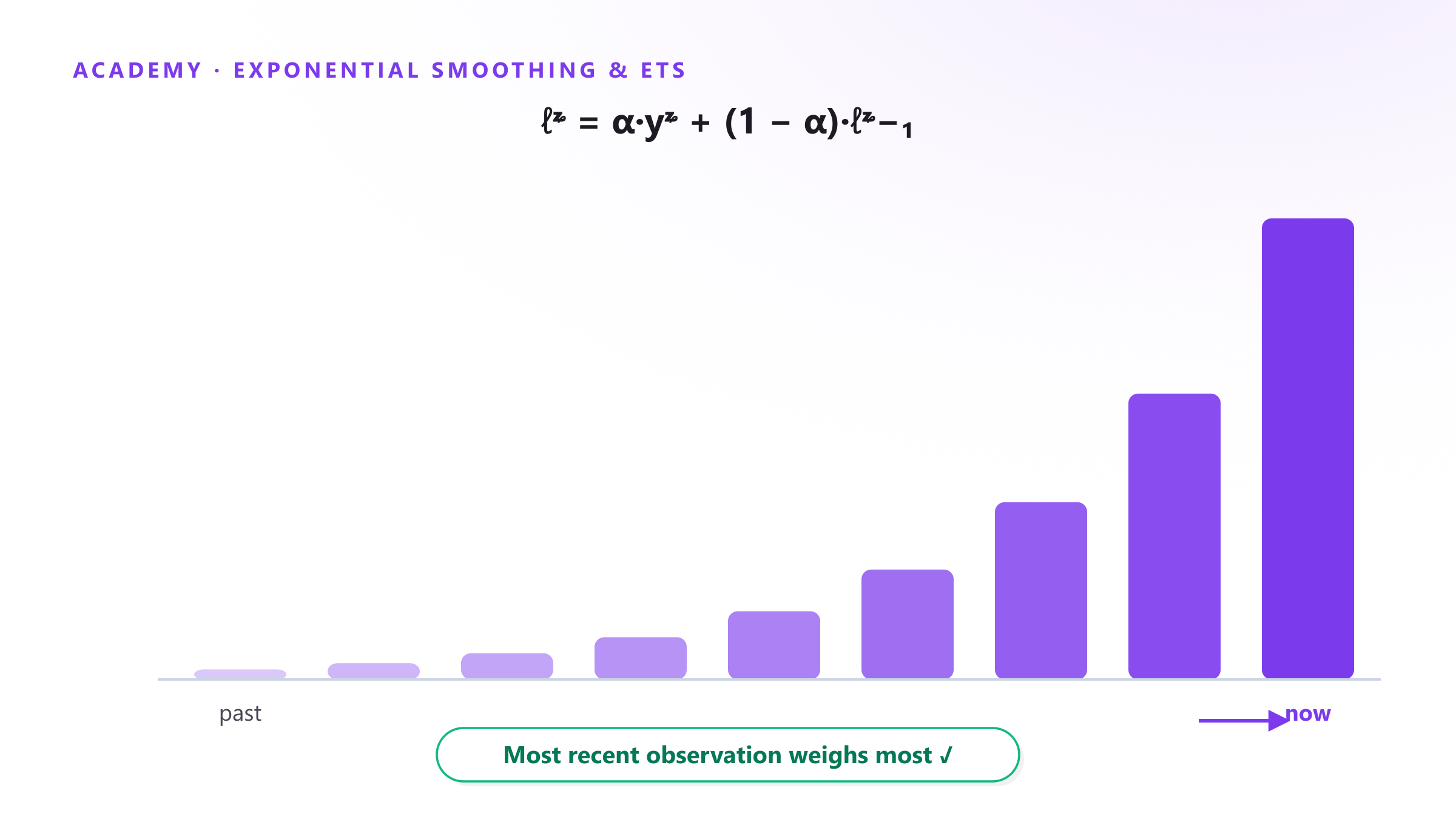
Exponential smoothing and ETS models: from simple smoothing to Holt-Winters
How exponential smoothing works, from simple exponential smoothing to Holt's trend method and Holt-Winters seasonal models, the ETS state-space framework, and when to prefer it over ARIMA.
Read article →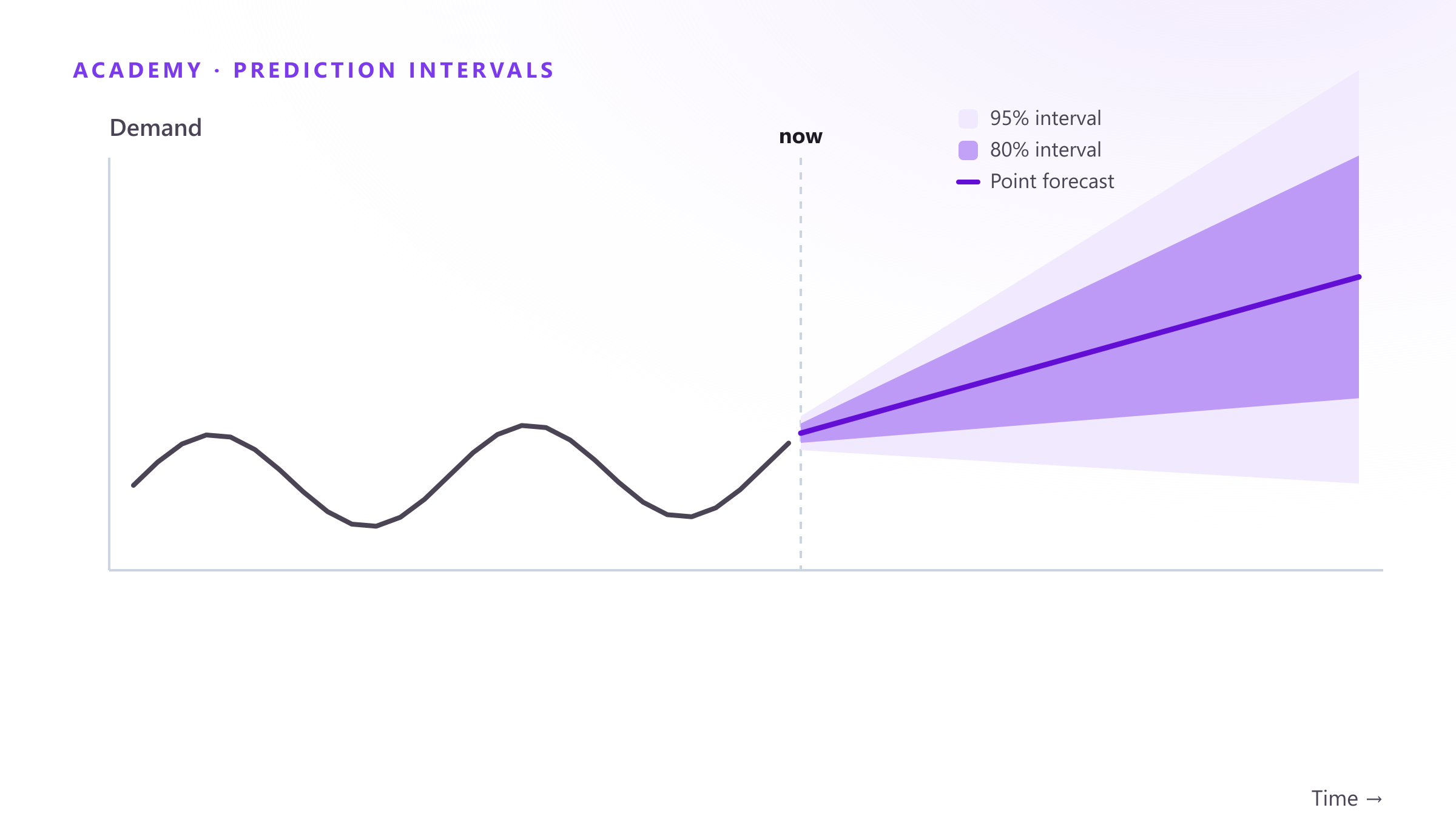
Prediction intervals in forecasting: quantifying uncertainty beyond the point forecast
What prediction intervals are, how ETS and ARIMA derive them analytically, why bootstrapping matters for non-Gaussian errors, and how to evaluate interval quality with coverage and pinball loss.
Read article →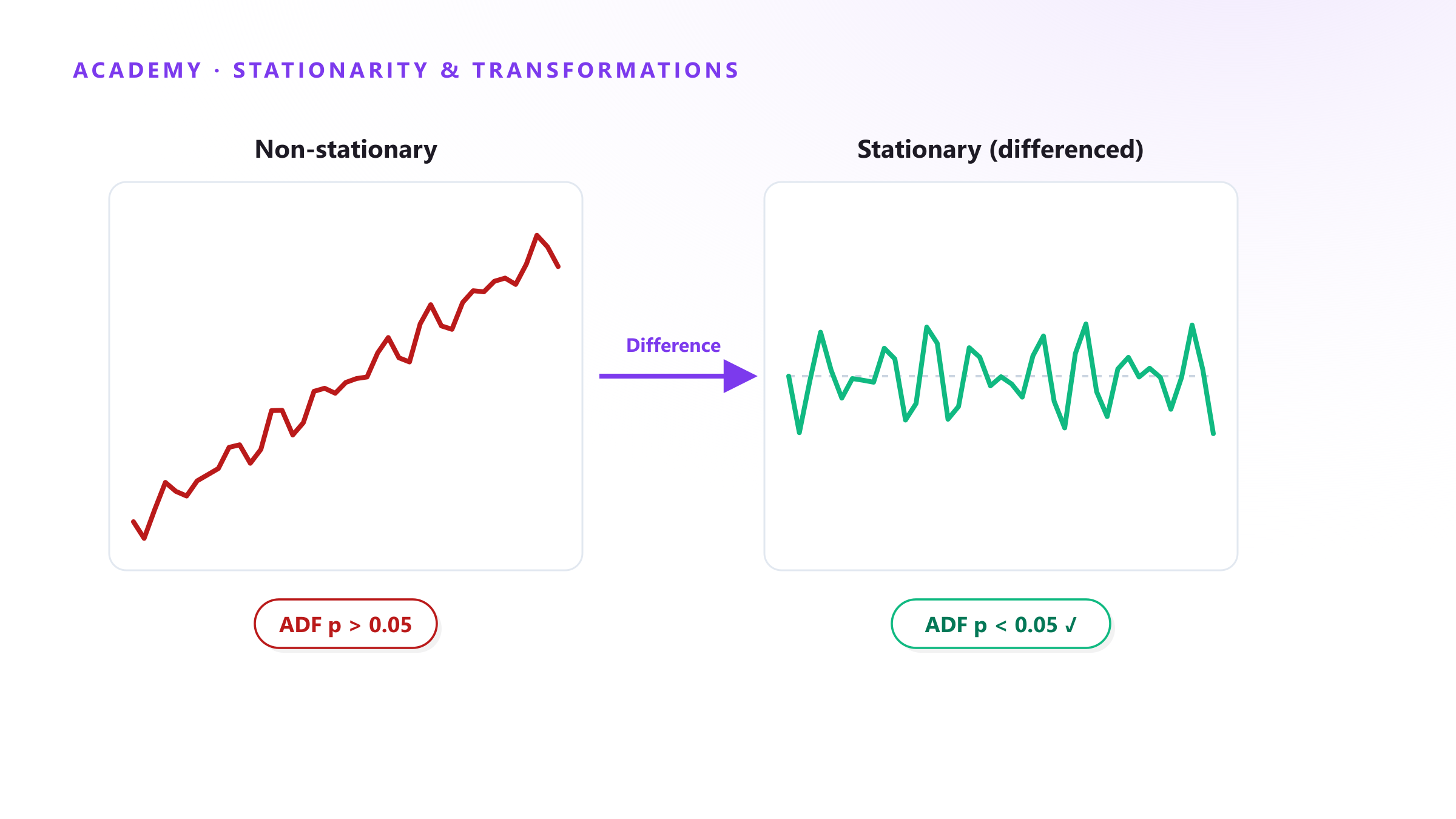
Stationarity in time series: unit-root tests, differencing and the Box-Cox transform
What a stationary time series is, why ARIMA needs one, how to test for stationarity with the ADF and KPSS tests, and when to use differencing or a Box-Cox transform to get there.
Read article →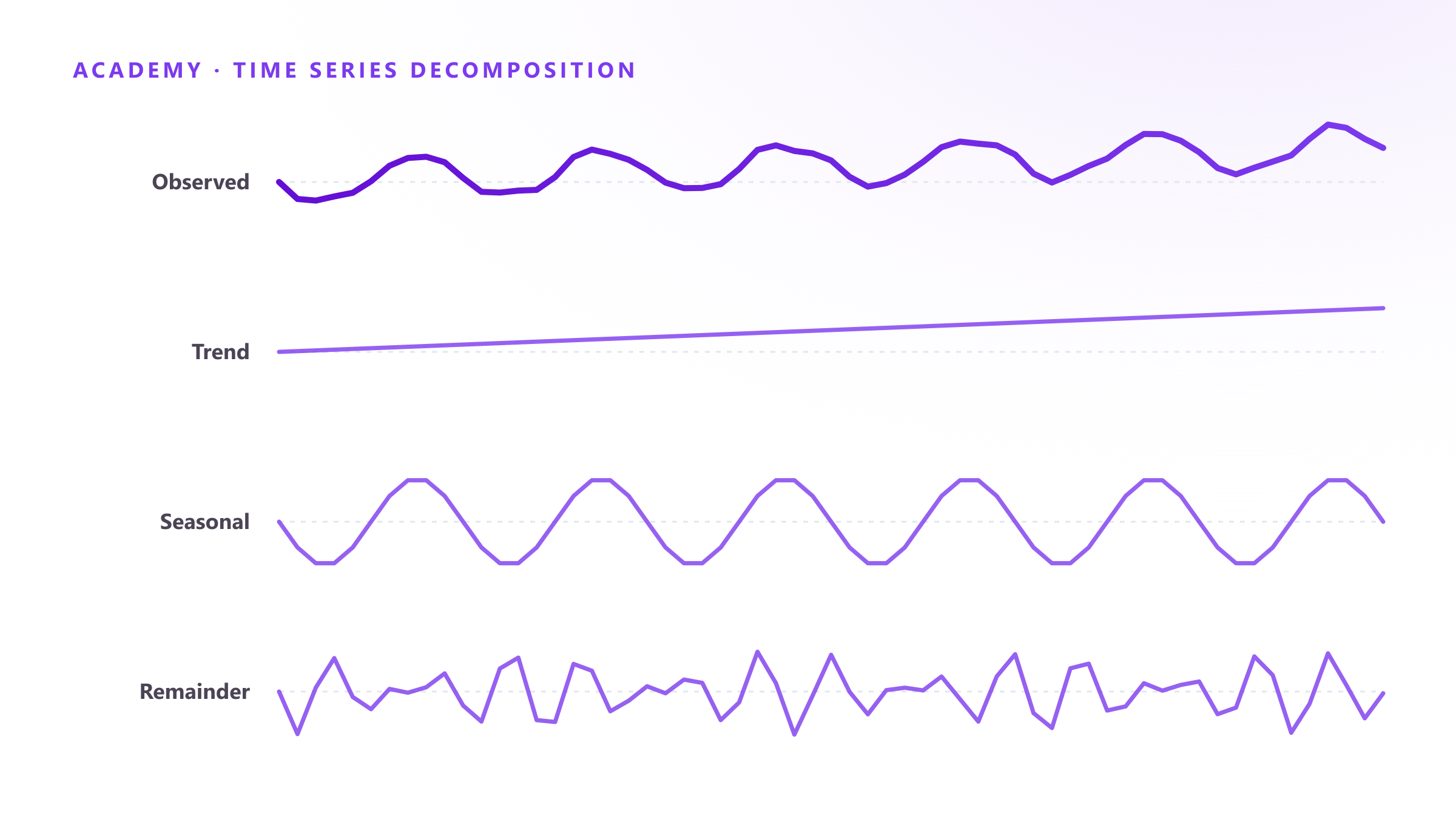
Time series decomposition: separating trend, seasonality and the residual with STL
How classical and STL decomposition split a time series into trend, seasonal and remainder components, when to use additive vs. multiplicative, and how decomposition feeds forecasting and anomaly detection.
Read article →No articles match your search.